
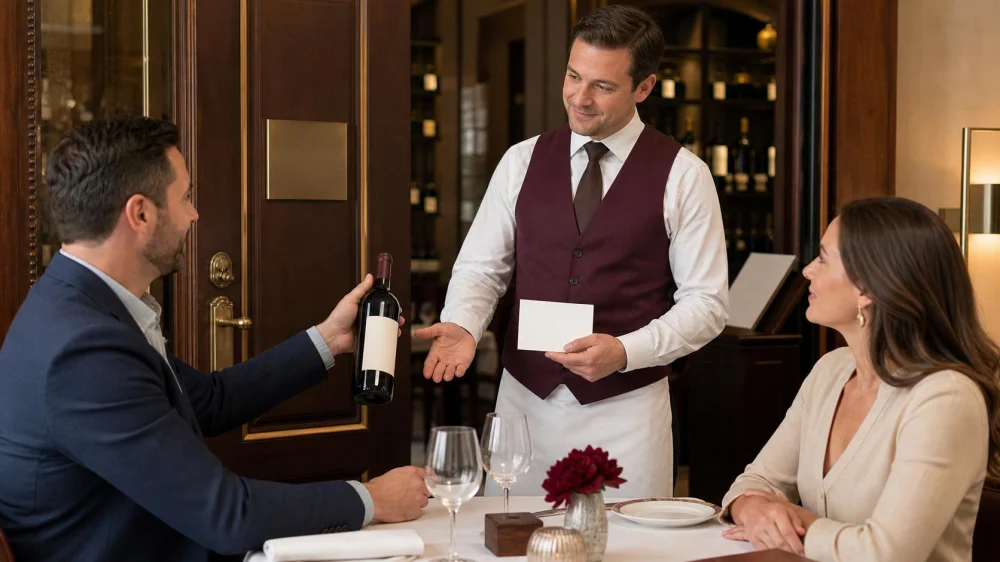
Restaurant Corkage Fee: Confirm Bottle Rules and Service
Bringing wine to a restaurant can make a celebration personal, but permission is never automatic. Alcohol laws, license conditions, house policy, bottle limits, prohibited categories, and corkage fees vary. Call the exact location before visiting, describe the bottle, confirm the total charge and service included, and bring a backup plan if the restaurant cannot accept it.
Quick answer
Ask whether outside wine is allowed for your date, party size, dining room, and reservation type. Confirm the corkage fee per bottle, bottle-size rules, number allowed, wines excluded because they appear on the restaurant list, and whether the fee includes opening, glassware, chilling, and decanting. Bring the bottle sealed, hand it to staff on arrival, and do not open or pour it yourself unless invited.
Confirm permission
Contact the restaurant directly rather than relying on an old review, directory, or another branch’s policy. State the reservation name, date, time, party size, and dining area. Private events, tasting menus, bars, patios, and holidays may follow different rules.
Ask for the answer to be noted on the reservation and save written confirmation when available. A restaurant may lawfully decline outside alcohol or change the program, so respond courteously and choose from the list or another venue.
Jake's of Willow Glen
San JoseSanta Clara CountyCalifornia
1074 Lincoln Ave Unit A, San Jose, CA 95125, USA
Understand the fee
Corkage usually covers the restaurant’s permission and some combination of handling, opening, glassware, service, chilling, and lost beverage sales. It is not simply the price of removing a cork, and it may apply to screw caps or sparkling wine.
Confirm whether the amount is per bottle, per person, or per volume equivalent; whether larger formats count as multiple bottles; and whether tax, service charge, or gratuity applies. Ask whether buying a bottle from the list changes or waives one corkage fee.
Describe the bottle
Provide producer, wine name, vintage, style, bottle size, closure, and whether it is still, sparkling, dessert, fortified, or nonalcoholic. The restaurant may restrict a bottle already represented on its list or may lack safe equipment for an unusual closure or format.
Check the bottle before leaving home for leakage, raised cork, broken seal, or sediment disturbance. Do not bring homemade, unsealed, refilled, or otherwise questionable alcohol. Staff must be able to identify and handle it under local rules.
Check limits and exclusions
Ask the maximum number of bottles and whether limits apply per table or reservation. Some policies exclude beer, spirits, cocktails, sake, large formats, rare bottles requiring special handling, or products sold by the restaurant.
Every person drinking must meet legal-age requirements, and staff may request identification or refuse service to an intoxicated guest. Plan safe transportation and never pressure anyone to drink simply because a special bottle was opened.
Transport it safely
Keep the bottle upright in a padded carrier, protected from extreme heat, freezing, sunlight, and impact. Secure it in the vehicle so it cannot roll or become a projectile. Follow open-container and alcohol transport laws where you travel.
For a wine needing chilling, ask whether the restaurant can chill it in advance or arrive early enough for approved service. Do not put ice, tools, or a loose bottle on the dining table without staff direction.
Coordinate service
Present the sealed bottle to the host or server when you arrive and remind them of the noted policy. Let trained staff open sparkling wine, damaged corks, and older bottles. Ask about decanting before the meal if sediment or aeration matters.
Discuss when to pour it relative to courses. Taste for condition when invited, but remember the restaurant did not produce the wine and may not replace a flawed bottle you supplied. A backup selection from the list can keep the meal moving.
Handle an unfinished bottle
Ask before opening whether local law and restaurant policy allow an unfinished bottle to leave and how it must be resealed and packaged. Staff may need to close, bag, label, or place it in a particular part of the vehicle.
Do not carry an open bottle out without authorization. If it cannot leave, accept that the remainder may need to stay. Never drink extra to avoid “wasting” it; safety comes first.
Use considerate etiquette
Choose a bottle that is meaningful and not obviously intended to undercut the restaurant’s least-expensive option. Offer a taste to the wine professional only if appropriate and permitted; no one is obligated to accept alcohol.
Tip and service-charge customs vary. Consider the full service and local norms, and ask how a mandatory charge is distributed before adding a gratuity. Thank the team for accommodating special handling.
Frequently asked questions
Does a screw cap avoid corkage?
Usually not. The fee concerns outside-bottle service, not the closure alone.
Can I bring a bottle that is on the restaurant list?
Some restaurants prohibit it. Provide exact bottle details when asking.
Can I open it at the table?
Wait for staff. License and safety rules may require restaurant handling.
Can I take the rest home?
Only when law and restaurant policy permit and staff complete the required resealing.
Next steps
Call the exact restaurant, describe the bottle, confirm fees and inclusions, ask about limits and unfinished-bottle handling, and note the approval on the reservation. Transport it sealed and secure, hand it to staff, drink responsibly, and keep a safe ride plan.



 Zona Rosa4.0 (1096 reviews)
 Giorgio's Italian Food and Pizzeria4.0 (1422 reviews)
 Classix3.0 (11 reviews)
 Three Flames4.0 (640 reviews)
 China Stix4.0 (831 reviews)
 Dac Phuc Restaurant4.0 (185 reviews)
 Most Popular Southern Biscuits in the US - A Guide to Southern Favorites
 Best Tapas and Small Plates Served at Restaurants Open After Hours
 Restaurant Accessibility Check: Entrance, Seating, and Restroom
 Restaurant Seating Time Limits: Ask Before Booking
 How Restaurants That Make Quick Decisions Easier Enhance Your Dining Experience
 How Restaurants Are Adapting to Serve More Late-Night Healthy Dining Options