
Restaurant Seating Time Limits: Ask Before Booking
On this page
Quick answer
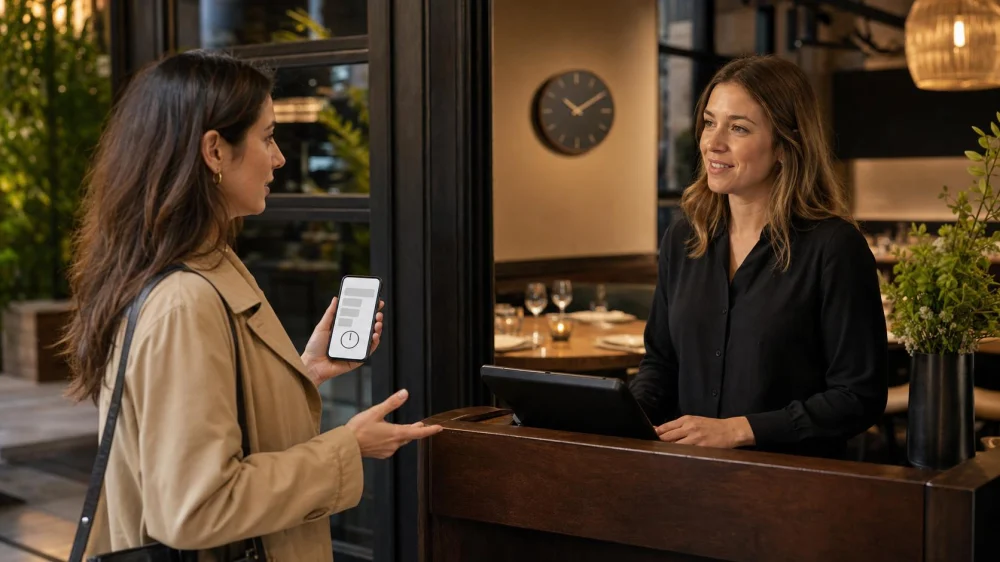
A restaurant seating time limit is the expected window for a party to use a table before another booking. It may vary by party size, meal period, table type, event, or menu. Check the reservation page and confirmation, then ask how long the table is available, when the clock starts, and whether your planned courses or celebration fit that window.
What a seating time limit means
Restaurants plan turn times—the expected time between seating one party and finishing that table—to pace reservations and avoid overlapping bookings. A guest-facing time limit can be an explicit policy, while an internal turn time may simply help the restaurant estimate availability. Do not assume an internal estimate is automatically a rule communicated to diners.
The window may start at the reservation time, the time the party is seated, or another point defined by the restaurant. A late arrival might reduce the usable dining period if the next reservation remains fixed. Large parties, tasting menus, brunch, patio tables, special events, or high-demand dates can have different timing.
Find the policy before booking
Read every booking screen before confirming. Check the restaurant’s official reservation page, experience description, confirmation email or text, and policy link. Look for phrases such as “table reserved for,” “dining duration,” “seating period,” “experience length,” or “turn time.” Save a screenshot or confirmation for reference.
If no duration appears and timing matters, call the restaurant using its official contact information. Ask: “How long is this table available for a party of four at 7 p.m.?” That is more useful than asking whether the restaurant “rushes people.” Confirm whether dessert, coffee, or after-dinner drinks can fit.
Third-party listings can be outdated or incomplete. Treat the restaurant’s current booking flow and direct answer as the working source. If a platform shows a special experience, read whether it is prepaid, prix fixe, timed, or limited to a particular seating area.
Match the reservation to your plan
A standard reservation window may suit a main course and dessert but not a long reunion, business meeting, proposal, tasting menu, or multi-generational celebration. Explain the plan before booking and ask which time, table, or service period is realistic.
- For a quick meal: choose an earlier or off-peak slot and review the menu in advance.
- For a long conversation: ask whether a lounge, bar, private room, or later seating offers more flexibility.
- For many courses: confirm that the menu is designed for the stated duration.
- For a celebration: disclose cakes, decorations, speeches, gifts, or photography and ask about timing and rules.
- For children or access needs: allow time for seating, communication, mobility, or sensory breaks and discuss accommodations directly.
Do not book multiple overlapping tables to manufacture a longer stay. Ask the restaurant whether it can combine, extend, or recommend an alternative.
Handle arrival and delays
Confirm the reservation when requested and arrive according to the stated policy. Know whether the restaurant seats incomplete parties and how long it holds a table. If delayed, contact the restaurant as soon as possible; a message does not guarantee the table or extend its end time, but it gives staff a chance to explain options.
At check-in, politely reconfirm the available time: “We understand the table is until 8:30—is that still correct?” If the restaurant seats you materially late, ask how that affects the planned window before ordering. Focus on a workable plan rather than assuming an automatic extension.
Communicate during the meal
Tell the server early if you need to leave by a fixed time or hope to order several courses. Ask whether food should be ordered together and when dessert decisions are needed. Prompt, clear ordering helps the kitchen pace the meal, but preparation times can still change.
If the meal is running behind because of service delays, raise the issue while staff can help: “We were told the table ends at 8:30, and our entrées have not arrived. What are our options?” The restaurant may adjust pacing, move a course, extend the table, or offer another solution. Outcomes depend on the actual room and reservations.
When the stated window is ending, pay promptly and move an extended conversation elsewhere if asked. If the policy was not disclosed or differs from the confirmation, request a manager conversation and keep the discussion factual.
Booking checklist
- Book through the restaurant or its authorized reservation channel.
- Read the exact duration, table type, menu, fees, and cancellation terms.
- Ask when the dining window starts and whether lateness shortens it.
- Confirm that your planned courses and occasion fit.
- Disclose large-party, child, mobility, communication, or celebration needs.
- Save the confirmation and current policy.
- Arrive on time and reconfirm the end time at check-in.
- Discuss pacing early rather than waiting until the final minutes.
Frequently asked questions
Are all restaurant reservations time-limited?
No. Some restaurants state a duration, some use internal planning estimates, and others allow the table to remain open. Policies can change by day, service period, party size, and experience.
Does a late seating automatically extend my reservation?
Not necessarily. Ask at check-in. The restaurant must balance your meal with later reservations, and the feasible response depends on how late the table became available and what is booked next.
Can I ask for more time?
Yes. Ask before booking when possible. A different time, table, menu, private space, or second location for drinks may work better. The restaurant may not be able to extend a high-demand slot.
Should a disability-related need be discussed?
If additional time or a service adjustment is connected to a disability, describe the needed accommodation directly and early. This guide is not legal advice; for legal questions, consult an appropriate ADA resource or attorney.
Sources and limitations
Resy’s current operator documentation defines turn time as the period from a guest being marked seated to finished and explains how it supports pacing and reservation availability. See Resy’s turn-time overview. Individual restaurants decide what they disclose and how they apply their policies.
This is general U.S. dining-planning information, not legal or contract advice. Restaurant policies, booking platforms, accessibility duties, remedies, and local laws vary. Preserve the current confirmation and ask the restaurant directly about your reservation.
Next steps
Before confirming, find the dining duration and compare it with your real plan. If the meal includes many courses, a celebration, a meeting, children, or additional access time, call with one concrete question. Save the answer, arrive promptly, and reconfirm the timing when seated.



 Burger King3.0 (83 reviews)
 Sushi Kawa4.0 (53 reviews)
 Mas Loco Cantina | Restaurant Sportsbar & Nightlife3.0 (58 reviews)
 Subway3.0 (196 reviews)
 Obok Restaurant4.0 (216 reviews)
 Tofoo Com Chay Vegetarian Cuisine4.0 (457 reviews)
 Most Delicious Nachos in the US
 How to Confirm a Restaurant Patio Is Really Open Today
 Best Seafood Restaurants Open Late for Fresh Crab, Oysters, and Lobster
 What Makes Some Menus Easier to Choose From: Smart Design Insights
 Best Places to Enjoy Comfort Food Anytime
 How to Find Restaurants Open Now With More Than Basic Options