
How to Verify Restaurant Access and Dietary Needs
On this page
- Quick answer
- Separate access from food safety
- Verify the complete access route
- Confirm communication and sensory needs
- Plan for a service animal
- Make a useful allergy call
- Reconfirm on arrival
- When to choose or avoid
- Important limitations
- Frequently asked questions
- Sources and evidence notes
- Conclusion and next steps
Quick answer
Before booking, describe the exact restaurant access or dietary need and ask a staff member to verify it—not merely whether the venue is “accessible” or “allergy-friendly.” For access, trace arrival, entrance, aisles, table, restroom, and exit. For food allergy, name the allergen and ask about ingredients, preparation, substitutions, and cross-contact. Record the answer, then reconfirm with the host and server on arrival.
Cross-contact means a food allergen is unintentionally introduced into another food, such as through shared surfaces, utensils, fryers, gloves, or ingredients.
Separate access from food safety
Accessibility and dietary safety require different facts, staff, and decisions. A restaurant may have a step-free entrance but an inaccessible restroom route. It may offer a dish without an allergen as an intentional ingredient but be unable to control cross-contact. Ask focused questions and let the diner make the final decision.
Use Restaurant Locator to build a shortlist, then contact each restaurant directly. Online photos and reviews can be outdated or incomplete, and a generic icon cannot describe a particular person's route, seating, communication, or food-safety requirement.
Verify the complete access route
- Arrival: accessible parking or drop-off location, curb cuts, surface, slope, and distance.
- Entrance: steps, threshold, door width and weight, automatic door, and alternate entrance procedure.
- Interior route: aisle width, turns, level changes, crowding, and whether furniture can be arranged without blocking circulation.
- Table: height, knee space, chair type, booth-only restrictions, and space for a mobility device.
- Restroom: route, doorway, stall arrangement, fixtures, and whether it is on the same accessible level.
- Exit: how staff will maintain a clear route during busy service or an emergency.
Ask for measurements when a few inches determine usability. “Wheelchair accessible” is too broad to answer whether a specific device fits a doorway or under a table.
Confirm communication and sensory needs
- Ask for a quieter table away from speakers, kitchen pass, bar, or crowded waiting area.
- Request adequate lighting for lip reading, signing, or low-vision menu use.
- Ask whether large-print, digital, screen-reader-compatible, or verbally read menus are available.
- Explain any need for written communication, extra processing time, or an assistive listening option.
- Confirm whether flashing lights, strong fragrances, live music, or a special event is expected.
Request the needed outcome rather than requiring a particular solution when alternatives could work. Confirm again on the event date because room assignments and entertainment can change.
Plan for a service animal
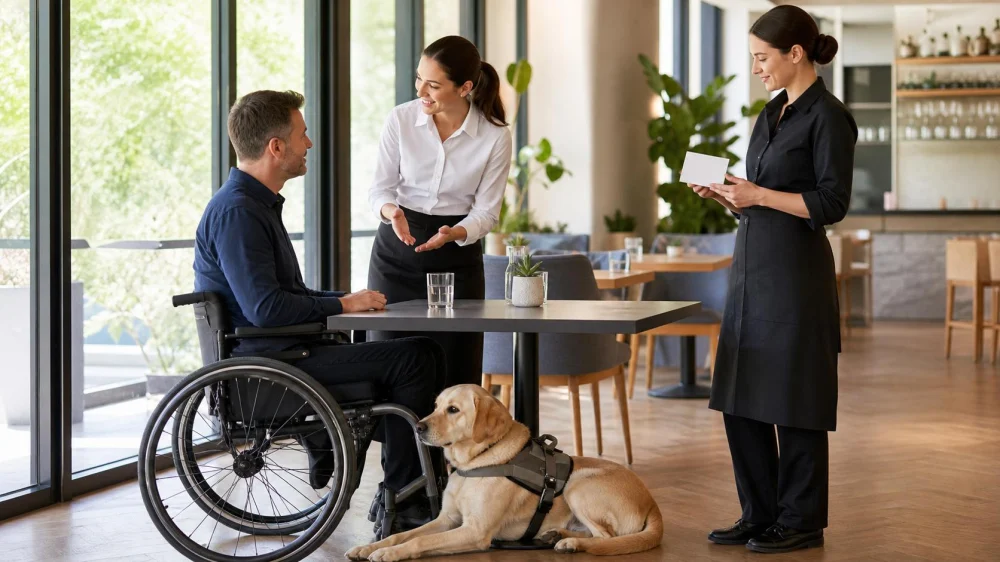
Under federal ADA guidance, businesses open to the public generally must allow service animals in areas where customers may go, even with a no-pets policy. A service animal is not required to wear a vest. Restaurants are not required to provide a chair, food, or drink for the animal, and the animal generally remains on the floor or is carried by the handler.
When reserving, request adequate floor space without treating the service animal as a pet reservation. The handler controls the animal. State or local law may add protections, so use current official guidance for a legal question.
Make a useful allergy call
- Call outside the busiest service period and ask for a manager or knowledgeable kitchen contact.
- Name the exact allergen; do not use only “special diet” or “sensitive.”
- Ask whether the ingredient appears in the dish, sauces, stocks, marinades, garnishes, beverages, and packaged components.
- Ask about shared fryers, grills, cutting boards, utensils, storage, gloves, and preparation surfaces.
- Ask whether substitutions are documented and communicated to the kitchen.
- State the date and party size, then ask how to identify the allergy when ordering.
- If staff cannot verify the process, choose another restaurant or dish.
A menu label such as vegan, dairy-free, gluten-free, or nut-free does not automatically answer a different allergy question or prove cross-contact controls. Never ask a diner to “just remove” a dangerous ingredient after preparation.
Reconfirm on arrival
- Tell the host about the access arrangement and verify the assigned table before seating.
- Tell the server the allergen clearly, even if it was recorded in the reservation.
- Ask the server to confirm the order with the kitchen and identify the dish when delivered.
- Do not swap plates or share utensils when that could undermine the plan.
- Keep prescribed emergency medication available and follow the individual's healthcare plan.
If the room, menu, or kitchen process changed, reassess rather than relying on the earlier call. Leaving is reasonable when a must-pass safety or access need is no longer met.
When to choose or avoid
Choose the restaurant when staff answer specific questions, describe a workable route or process, document the reservation, and are willing to reconfirm. Not ideal when answers rely on guesses, the only route requires unsafe lifting, the accessible restroom is unavailable, or staff dismiss cross-contact concerns.
Choose another option when a required route, communication aid, service-animal access, or allergy-control process cannot be verified. Convenience, ratings, and cuisine should not override a must-pass requirement.
Important limitations
This article offers general planning information, not legal or medical advice and not a guarantee of accessibility or allergen safety. ADA application can depend on facts and current law; food-allergy risks and emergency plans are individual. Consult official agencies, qualified legal counsel, or a healthcare professional when needed.
For signs of a severe allergic reaction, follow the person's emergency plan and seek emergency help immediately. Do not wait for a restaurant manager or online advice.
Frequently asked questions
Is an accessibility icon enough?
No. Verify the complete route and the person's specific requirements, including seating and restroom access.
Does “gluten-free” mean safe for every allergy?
No. It addresses a specific claim and does not answer unrelated allergens or the kitchen's cross-contact process.
Can a restaurant refuse a service animal because it serves food?
Federal ADA guidance generally requires service animals to be allowed in customer areas despite a no-pets policy, subject to defined exceptions. Check current official guidance for the situation.
Should I disclose a disability diagnosis?
Usually the restaurant needs the functional accommodation, not private diagnostic detail. Share only what is necessary and what the diner authorizes.
What if different employees give different allergy answers?
Treat the inconsistency as a warning. Ask a manager to verify the current kitchen process; choose another option if confidence remains low.
Sources and evidence notes
The U.S. Department of Justice explains that restaurants are public accommodations under ADA Title III and must provide full and equal enjoyment in its guide to businesses open to the public. DOJ's service animal FAQ addresses restaurant access and table rules. The FDA describes allergen cross-contact and the importance of preventing it in retail food establishments.
Conclusion and next steps
Write the exact must-pass needs in one sentence, use Restaurant Locator to find three candidates, and call each with the same questions. Record who answered and what was verified, then let the diner choose. A useful restaurant search ends with a workable route and trustworthy food process—not merely a promising listing.




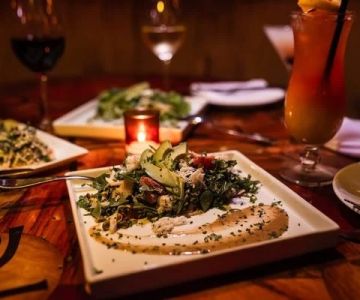
 Metro Balderas Taqueria4.0 (1202 reviews)
 Dan Izakaya Restaurant4.0 (670 reviews)
 Taqueria El Ranchito4.0 (315 reviews)
 Gen Korean BBQ House4.0 (2267 reviews)
 México Bakery (food truck)3.0 (11 reviews)
 Maiwand Market4.0 (495 reviews)
 Best International Restaurant Experiences in America | Restaurant Locator
 Woman-Owned Restaurants Extending Their Hours | Restaurant Locator
 Why More Restaurants Are Offering "Late Happy Hours" for Night Owls | Late Night Dining Trends
 The Secret to Finding the Best Local Restaurants Still Open Late for Foodies
 Best International Cuisine Restaurants in the US – Top Global Dining Spots
 The Best Places to Find Late-Night Asian Cuisine Restaurants Near Me