

Restaurant Health Inspection Records: Read Them in Context
A restaurant inspection record is a dated snapshot under a specific local system, not a permanent guarantee or a universal rating. Use the health department's official database, match the exact name and address, identify the inspection type and date, read individual observations, and check whether corrections or follow-up inspections were recorded. Compare only within the same jurisdiction because scores, grades, terminology, frequency, and publication practices differ.
In this guide
Start With the Official Source
Search the city, county, district, or state health department that regulates the location. Restaurant directories and news summaries may be useful leads, but their records can be incomplete or delayed. Confirm that the page is an official government publication and read its explanation of scoring and terminology.
Some agencies publish full reports; others show grades, points, closures, or limited recent history. Publication delay does not necessarily mean no inspection occurred. Contact the agency through its official records channel when information is unavailable.

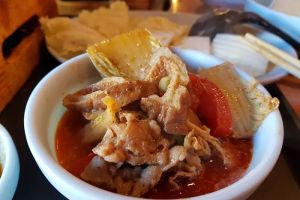
New Tung Kee Noodle
San JoseSanta Clara CountyCalifornia
1098 E Brokaw Rd #30, San Jose, CA 95131, USA
Match the Exact Establishment
Match street address, suite, permit holder, and facility type. Similar names may belong to unrelated restaurants, and a chain's record at one address does not describe another location. A restaurant inside a hotel, market, airport, food hall, or shared kitchen may appear under a legal operator name.
Watch for ownership or permit changes. A report may belong to a prior operator at the same address. The database may show closed permits alongside active ones, so check status and effective dates before drawing conclusions.
Identify the Inspection Type
Routine, opening, complaint, follow-up, preoperational, risk-based, and closure inspections have different triggers and scopes. A complaint inspection is not proof that every allegation was confirmed; the report should show what the inspector observed.
Read the inspection date and, if available, arrival conditions. A follow-up focused on earlier items may not repeat every part of a routine inspection. Special events, mobile vendors, caterers, and temporary facilities can operate under different inspection schedules.
Read Violations, Not Just the Score
Jurisdictions classify observations differently. Many distinguish higher-priority factors connected more directly to foodborne illness from sanitation, maintenance, or record issues, but the names and weights vary. Use the agency's definitions rather than imposing another city's categories.
Read the inspector's factual note, the rule reference, and whether it was corrected on site. One report may list multiple observations under one item, while another may count each separately. A numerical score can hide that detail.
Do not infer a specific illness or outbreak from a violation alone. Public-health agencies investigate illnesses through separate processes using epidemiology, laboratory information, and other evidence.
Check Corrections and Follow-Up
Look for “corrected on site,” a required correction date, reinspections, training, permit action, or closure and reopening. An on-site correction shows that the immediate observation was addressed during the visit, but it does not by itself establish long-term practice.
Repeated similar observations across several routine inspections may be more informative than an isolated issue, but compare language carefully. A later clean report is relevant; do not circulate an old closure notice without its reopening or current status.
Compare Records Carefully
Compare a restaurant with other facilities only under the same authority and period. Different regulators use different point thresholds, letter grades, inspection frequency, risk categories, and disclosure rules. Even within one system, a complex facility may receive more visits than a low-risk operation.
Consider several recent routine and follow-up records rather than selecting the best or worst line. Note gaps without assuming their cause. A fair summary states the date, inspection type, cited observation, and recorded disposition.
Understand What Records Cannot Show
An inspection is not continuous monitoring and cannot guarantee that every meal is free of pathogens, allergens, or handling errors. It also does not rate taste, hospitality, nutrition, employment practices, or every building feature unless the local program includes them.
Allergy safety requires a direct conversation with the restaurant about ingredients and cross-contact. A favorable inspection does not certify an individual dish for an allergy. People at higher risk of foodborne illness should follow guidance from qualified healthcare and public-health sources.
Ask Factual Questions
If a record concerns you, ask the restaurant what was corrected and whether a follow-up occurred. Keep the tone factual and reference the report date. Staff may refer you to a manager or the health department for official interpretation.
Report a current suspected food-safety issue through the local health authority's official process. Provide the restaurant location, visit date and time, foods involved, symptoms and timing when relevant, and contact information. Seek medical care for concerning symptoms and emergency help for severe illness; do not wait for an online complaint response.
- Official regulator and scoring guide located
- Exact address, operator, permit, and status matched
- Inspection type and date identified
- Individual observations and definitions read
- On-site corrections and follow-up checked
- Several recent records reviewed
- Comparisons limited to the same system
- Current status included when sharing information
Frequently Asked Questions
Does a high score guarantee safe food?
No. It describes findings under that system at a point in time. Safe operation requires continuing controls, and no inspection eliminates all risk.
Why do I see no record?
The facility may use another legal name, fall under another authority, be new, or face publication delay. Ask the official agency rather than assuming it was never inspected.
Is every violation equally serious?
No. Classification depends on local rules. Read priority, point, and correction definitions in the regulator's guide.
What does “corrected on site” mean?
It generally means the observed condition was addressed during the inspection. It does not necessarily erase the citation or predict future compliance.
Can I report illness anonymously?
Processes vary. Agencies may accept anonymous reports, but contact details can help investigators clarify timing and exposure. Review the official privacy notice.
Inspection records are most useful when read precisely: official source, correct location, dated observation, local definition, and documented correction. Systems and public-health guidance change, so rely on the responsible agency for current status and professional interpretation.





 Duan's Kitchen 段純貞4.0 (168 reviews)
 Mikayla's Cafe4.0 (1242 reviews)
 Idly Express Drive-Thru4.0 (40 reviews)
 Lamella Tavern4.0 (64 reviews)
 Distrito Federal4.0 (149 reviews)
 STACKS Willow Glen3.0 (44 reviews)
 The Best Vegan-Friendly Late-Night Restaurants Near Me for Delicious Plant-Based Meals
 Best Places for Late-Night Dining and Handcrafted Cocktails After Hours
 Best Places to Find Late-Night Dining That Are Dog-Friendly and Accept Pets
 Late-Night Dining Deals: Where to Get Discounts at Restaurants Open Near Me
 Dining Out on a Budget: Affordable Restaurants in Metropolitan Areas Near You
 Restaurants Known for Their Signature Dishes Around the World