
How to Check Restaurant Parking Before You Reserve
On this page
- Quick answer
- Map every legitimate parking option
- Calculate the real cost and restrictions
- Verify accessible parking and drop-off
- Match parking to the reservation time
- Plan the last block on foot
- Create a fallback before driving
- Parking checklist
- Limitations and safety notes
- Frequently asked questions
- Save two legal options
Quick answer
Before reserving, ask whether the restaurant has its own lot, validated garage, valet, accessible spaces, legal loading or passenger drop-off, bicycle parking, or a recommended public facility. Check entry address, operating hours, height and vehicle limits, rates, validation terms, payment method, event restrictions, and the walking route. Save a second legal option because availability can change before arrival.
A map pin marks the restaurant, not necessarily the garage entrance or safest drop-off point.
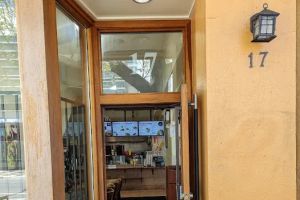
The Vegan Lasagna Garden
San JoseSanta Clara CountyCalifornia
Inside Kronas, 17 S 4th St, San Jose, CA 95112, USA
Map every legitimate parking option
List the restaurant lot, shared shopping-center spaces, nearby garages, municipal lots, legal street parking, valet, transit, rideshare drop-off, and bicycle storage. Ask which options the restaurant controls and which are independent.
Verify the exact garage entrance and direction of approach. A facility may share a building but have an entrance on another street. Do not assume an empty private lot belongs to the restaurant.
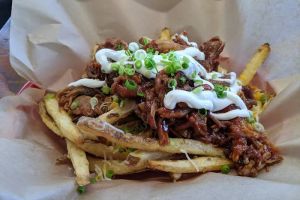
The Corner Cafe & Diner, By El burrito crazy
San JoseSanta Clara CountyCalifornia
414 E William St suite a, San Jose, CA 95112, USA
Calculate the real cost and restrictions
Check hourly or event rates, minimums, taxes, valet charge, expected tip, lost-ticket fee, charging fees, and validation discount. Ask whether validation requires a minimum purchase or applies only to one named facility.
Read posted signs on arrival for permit zones, loading hours, street cleaning, meters, resident restrictions, time limits, towing, and overnight closure. Online pricing can be outdated, and the sign at the facility controls.
Verify accessible parking and drop-off
Ask where accessible spaces are relative to a step-free entrance and whether the route has curbs, steep slopes, narrow doors, gravel, construction, or an elevator. Confirm the accessible entrance is open during the reservation, not only business hours for another tenant.
For drop-off, identify a legal curb area where a passenger can exit away from traffic and the driver can continue safely. Do not stop in a travel lane, bike lane, crosswalk, bus stop, fire zone, or access aisle. A disabled parking placard does not permit unsafe stopping.
Match parking to the reservation time
Consider weekday rush hour, concerts, sports, festivals, street closures, snow restrictions, and garage closing time. Ask whether a venue event changes rates or fills nearby facilities. Add time for entry queues, payment, elevator, and walking.
Tell the restaurant if a mobility-related arrival may require extra time and ask about its late-arrival policy. Do not speed or park illegally to protect a table; call with an updated arrival time.
Plan the last block on foot
Review sidewalk continuity, lighting, crossings, construction, weather exposure, hills, and the building entrance. Send the route and meeting point to the group. At night, choose a well-lit facility and avoid walking while focused on a phone.
For valet, remove valuables, photograph condition, keep the claim ticket, and confirm pickup location and closing time. For an EV, do not count on a charger without a parking backup.
Create a fallback before driving
Save the address and hours of a second garage or lot, plus a safe passenger drop-off. Decide who can circle, park farther away, use transit, or switch to rideshare. Keep enough phone battery and an alternate payment method.
If every legal option is full, contact the restaurant and change the plan. Blocking access, using reserved property, or leaving a car in a tow zone can cost more than missing a reservation.
Parking checklist
- Get the exact lot or garage entrance address.
- Confirm hours, rates, validation, and payment.
- Check height, vehicle, and overnight limits.
- Verify accessible space-to-door route.
- Identify a legal drop-off point.
- Account for events, construction, and weather.
- Save a second legal parking option.
- Share the walking route with the group.
Limitations and safety notes
- Parking availability, rates, and restrictions change frequently.
- Posted signs, local law, and facility rules control.
- Do not enter a full, closed, flooded, icy, smoke-filled, or height-restricted garage.
- Never leave children, vulnerable adults, pets, or valuables unattended in a vehicle.
Frequently asked questions
Does restaurant validation mean parking is free?
Not necessarily. It may provide a discount or cover only a limited time.
Can I use the loading zone for dinner?
No. Loading and passenger zones have specific uses and time limits shown by local signs.
Will valet accept every vehicle?
Ask about size, manual transmission, EV, modified controls, mobility equipment, and closing time.
Is rideshare drop-off always at the front door?
No. Traffic controls or building design may require a designated area on another side.
How early should I arrive?
Use local traffic, event, garage, walking, and mobility conditions; add a realistic buffer and know the restaurant's late policy.
Save two legal options
Before booking, pin the exact entrance of the preferred facility and one backup, then confirm their hours extend beyond the expected end of dinner.





 Panda Express3.0 (112 reviews)
 TOGO'S Sandwiches4.0 (216 reviews)
 Chaat Cafe3.0 (684 reviews)
 Mar Y Sol Taqueria4.0 (247 reviews)
 Best Taste Chinese Restaurant4.0 (288 reviews)
 Hashiri Bettei Kaiseki Aoki4.0 (33 reviews)
 How to Find Nearby Food That Matches What You’re Actually Craving
 Best Vegan Smoothies in California
 Late-Night Dining Spots Near Me Worth Visiting for Food Lovers
 Late-Night Dining Deals: Where to Get Discounts at Restaurants Open Near Me
 How to Confirm a Restaurant Patio Is Really Open Today
 Places That Are Open When You Need Them Most