
Restaurant Private Dining: Check Minimums, Access, and Timing
Table of contents
- Quick answer
- Define the event before contacting venues
- Separate minimums, fees, tax, and gratuity
- Verify the room and accessible route
- Plan the menu and allergy conversation
- Build a realistic event timeline
- Use a written confirmation checklist
- Know the limits of online research
- Frequently asked questions
- Sources and verification
- Conclusion
Quick answer
Before reserving a restaurant private dining room, confirm the guest count, food-and-beverage minimum, room fee, deposit, cancellation terms, service charge, tax, accessible route, menu format, allergy process, event duration, and final-payment deadline. Ask for one written proposal that shows every charge and operating rule. A room that looks affordable online can cost more once minimums, staffing, rentals, and overtime are added.
Define the event before contacting venues
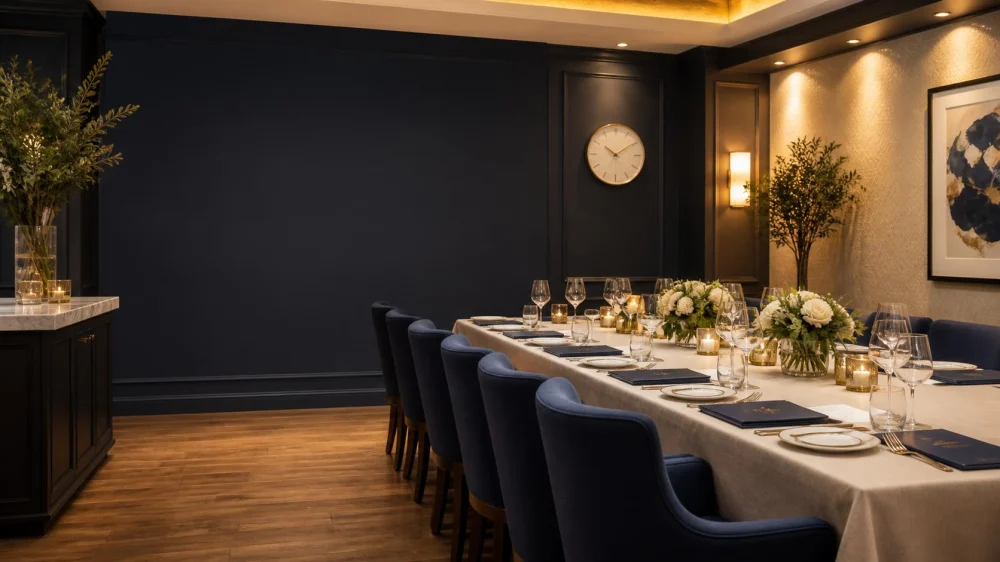
A useful venue inquiry begins with a compact event brief. Write down the date, a preferred start and end time, a realistic guest range, the purpose of the gathering, and whether the group needs a fully private room or can accept a semi-private section. Note whether guests will sit for a meal, stand for a reception, give speeches, show slides, exchange gifts, or bring children. These details affect room capacity and service more than a single head-count number.
Give the venue two counts: the number you expect and the highest number the room must accommodate. Ask when the final guaranteed count is due and what happens if fewer people attend. Some proposals price by person, while others require a minimum amount of food and drink regardless of attendance. Do not assume an unused seat reduces the final bill.
Clarify privacy in physical terms. Ask whether the room has full walls and a closing door, whether other guests or staff pass through it, and whether music from the main dining room is audible. If confidentiality matters, such as for a business discussion, say so. A label such as “private dining” does not describe every layout.
Separate minimums, fees, tax, and gratuity
The most important number is usually not the menu price. Request an itemized estimate with separate lines for the food-and-beverage minimum, room or facility fee, deposit, service charge, gratuity, sales tax, administrative charge, staffing, equipment, cake cutting, corkage, coat service, security, delivery, and overtime. Ask which charges are taxable and whether the service charge is distributed to employees as a tip. Policies and legal treatment vary, so the venue’s written explanation matters.
A minimum is a required level of eligible spending, not necessarily an added fee. Confirm which purchases count toward it. Alcohol, take-home items, rentals, taxes, and service charges may or may not qualify. If the group spends less than the minimum, ask how the shortfall is billed. If the group spends more, ask how authorization for additional orders will work.
Make three totals for comparison: the estimated subtotal, the expected all-in amount, and a reasonable high case. The high case can include several extra guests, another beverage round, approved overtime, and optional equipment. This small exercise prevents a low headline price from hiding a high final cost.
Verify the room and accessible route
Ask about the entire arrival path, not just the table. Confirm an accessible entrance, the route from parking or drop-off, doorways, elevators if needed, restroom access, and enough maneuvering space around occupied tables. The U.S. Department of Justice identifies restaurants as public accommodations and points businesses and guests to ADA standards covering accessible routes and dining surfaces. A direct conversation with the venue is still necessary because an online photo cannot confirm current furniture placement or a working elevator.
Tell the coordinator about specific functional needs without making guests disclose unnecessary medical details. Examples include step-free entry, space for a wheelchair or mobility device, an armless chair, a quieter seat, clear sightlines for lip reading, or permission for a service animal. Ask the venue to describe how it will meet the request in that particular room. If the answer is vague, request a site visit or a short live video walkthrough.
Also check practical movement. Can servers reach every place setting without asking guests to stand? Is there a clear route to the restroom? Will a podium, gift table, stroller, or audiovisual stand narrow an aisle? Have the final floor plan attached to the event confirmation when layout is important.
Plan the menu and allergy conversation
Private events commonly use a fixed menu, shared dishes, stations, or a limited list of choices. Ask when selections are due, whether prices change with substitutions, and how children’s meals or nonalcoholic packages are handled. Confirm portion format and course timing so the group does not expect individual plates when the proposal specifies family-style service.
For food allergies, contact the venue early and identify the specific allergen and severity. Ask who records the request, how it reaches the kitchen and service team, whether shared fryers or preparation surfaces are used, and what alternatives the kitchen can confidently provide. The FDA notes that food-allergy reactions can be serious; a guest with a diagnosed allergy should follow their clinician’s plan and carry prescribed emergency medication. A restaurant conversation reduces uncertainty but cannot guarantee zero cross-contact unless the venue explicitly makes and can support that commitment.
Choose one organizer to collect dietary information and send it by the venue’s deadline. Use exact descriptions rather than broad labels when possible. Keep the final list in writing, then ask how affected guests will identify themselves at the event. Last-minute verbal relays are easy to lose during busy service.
Build a realistic event timeline
Translate the reservation window into a simple run of show: organizer arrival, guest arrival, drinks, first course, remarks, main course, dessert, final call, payment, and departure. Ask when the room becomes available for setup and when all belongings must be removed. If another booking follows, the end time may be firm even when dinner starts late.
Tell the coordinator about speeches, videos, awards, games, or surprise arrivals. Ask when these activities fit the kitchen’s service sequence. A ten-minute speech placed just as hot entrées leave the kitchen can affect food quality and staff flow. Assign one person to cue the coordinator rather than letting several guests issue competing instructions.
Confirm audio and visual details separately. Ask what equipment is included, connector type, screen visibility, microphone limits, volume rules, internet access, power placement, and technical support. Test presentation files and adapters before guests arrive. If outside entertainment or décor is allowed, verify delivery times, insurance requirements, flame and attachment restrictions, and cleanup responsibility.
Use a written confirmation checklist
Before paying a deposit, make sure the proposal or event agreement answers these questions:
- What exact room, date, access time, event time, and departure time are reserved?
- What are the expected, guaranteed, minimum, and maximum guest counts?
- Which purchases count toward the food-and-beverage minimum?
- What fees, service charges, gratuities, and taxes apply?
- How much is the deposit, when are payments due, and which methods are accepted?
- What are the cancellation, date-change, no-show, and force-majeure terms?
- What menu, beverage, allergy, and outside-food rules apply?
- What accessible route and requested accommodations will be available?
- What furniture, linens, equipment, staffing, setup, and cleanup are included?
- Who may approve extra spending or overtime during the event?
Save the signed agreement, menus, floor plan, receipts, and email changes in one folder. If a phone call changes a material term, send a short written recap and ask the venue to confirm it. On the event day, bring the current version and the coordinator’s direct contact information.
Know the limits of online research
Photos, reviews, and directory listings are useful for finding candidates, but they may show an older room layout, a different menu, or pricing from another season. Capacity figures may also describe standing attendance rather than seated dining. Treat third-party information as a lead, then verify details with an authorized venue representative.
This guide cannot determine whether a contract is fair, interpret local tax or gratuity rules, or confirm that a room meets an individual guest’s access needs. For a large, high-cost, regulated, or legally sensitive event, consider professional planning or legal advice appropriate to the situation. The venue’s current written agreement controls the booking.
Frequently asked questions
Is a food-and-beverage minimum the same as a room fee?
No. A minimum usually requires a specified amount of eligible food and drink spending, while a room fee is a separate charge for the space. A venue may use either or both. Ask for an itemized proposal and the rule for any minimum shortfall.
When should I get the final guest count?
Ask the venue for its guarantee deadline, then set your guest deadline several days earlier. Leave time to reconcile replies, dietary needs, and seating. Confirm how additions or absences after the guarantee affect billing.
Can I bring a cake, wine, decorations, or a vendor?
Only if the venue approves. Ask about licensed-bakery requirements, corkage, delivery windows, insurance, attachment methods, candles, storage, cleanup, and removal. Put every approval and charge in writing.
How do I compare two private dining proposals?
Normalize them to the same guest count, menu level, beverage assumption, duration, and equipment needs. Compare all-in expected and high-case totals, not just per-person prices. Then weigh privacy, access, logistics, menu fit, and cancellation risk.
Should I tour the room?
Tour it when layout, accessibility, acoustics, privacy, presentation equipment, or décor matters. Visit near the planned event time if possible. If travel is impractical, request a current live video walkthrough and a dimensioned floor plan.
Sources and verification
- U.S. Department of Justice, Businesses That Are Open to the Public — official overview of ADA Title III and restaurant accessibility topics.
- U.S. Department of Justice, ADA Update: A Primer for Small Business — official guidance on accessible routes, dining areas, and service.
- U.S. Food and Drug Administration, Food Allergies — official consumer information about allergens and reactions.
Use these sources for general background. Verify prices, menus, room conditions, accessibility arrangements, and contract terms directly with the restaurant for the event date.
Conclusion
A successful private dining booking is a coordination task, not simply a room search. Start with a clear event brief, compare complete costs, verify the arrival route and room setup, plan dietary communication, and map the service timeline. The best final protection is a current written agreement that identifies the room, people, money, menu, timing, responsibilities, and change rules in one place.




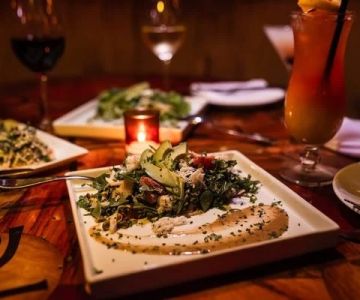
 The FAB4.0 (202 reviews)
 The Salad Planet3.0 (23 reviews)
 Panda Express3.0 (544 reviews)
 Las 7 Regiones3.0 (372 reviews)
 The Pasta Market4.0 (424 reviews)
 Sushi Kawa4.0 (53 reviews)
 How to Use Social Media to Find Restaurants Open Near Me Before They Go Viral
 Cheap Eats Near Me Open Now That Are Still Worth Trying
 Top Restaurants Open Late Near Me That Serve Signature Seafood Dishes
 Chinese Restaurants That Locals Keep Coming Back To - Insider Picks
 Restaurants That Work When You Need Food Immediately Guide
 Best Places for Late-Night Dining Serving Seasonal Menu Dishes Near You