
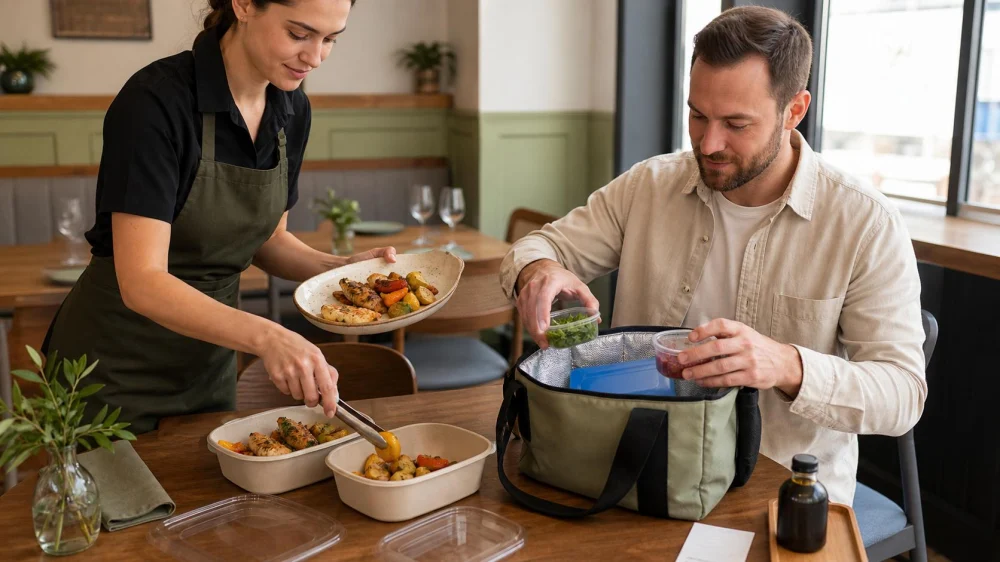
Restaurant Leftovers: Pack, Chill, and Reheat Safely
Restaurant leftovers can make a good second meal when time and temperature are controlled. Decide what to keep before food sits too long, pack it in clean leak-resistant containers, refrigerate promptly, label the date, and reheat only what you will eat. When time, storage, or handling is uncertain, discard the food rather than relying on smell or appearance.
Quick answer
USDA advises refrigerating perishable food within two hours, or within one hour when the temperature is above 90°F. Pack leftovers near the end of the meal, go directly to refrigeration, and use shallow containers for faster cooling. Eat refrigerated leftovers within three to four days or freeze them. Reheat to 165°F, checking several places and stirring food for even heating.
Start the clock at serving
The safe-time window includes time on the restaurant table, in a takeout bag, during errands, and in the car. It does not restart when food enters a new container. Estimate from when the dish was served, not when you requested the box.
Buffets, shared plates, outdoor patios, and long celebrations can use most of the window before departure. If perishable food has already exceeded safe limits, leave it rather than packing it “just in case.”
Choose what travels well
Cooked meat, poultry, seafood, eggs, dairy-rich sauces, rice, pasta, cut produce, and many desserts require temperature control. Crisp fried items, dressed salads, delicate herbs, and assembled sandwiches may lose quality even when safely chilled.
Ask staff what can be packed and whether any item was previously reheated, held warm, or served with raw components. Raw or undercooked foods and dishes for pregnant people, young children, older adults, or immunocompromised diners deserve extra caution.
Pack separately
Use clean, food-grade, leak-resistant containers. Keep sauces, crisp garnishes, raw toppings, and hot components separate when possible. Do not place a used eating utensil into a shared container.
Divide a large dense portion into shallow containers at home so it cools faster. Keep bones, skewers, shells, toothpicks, and inedible garnish obvious rather than buried. Close lids securely, but follow safe cooling guidance rather than leaving food on the counter to “cool first.”
Control the trip home
Go directly home after the meal. Do not leave leftovers in a parked car, trunk, sunny luggage area, or hotel room. Vehicle air temperature is not reliable refrigeration, even in cool weather.
For a longer trip, use an insulated cooler with enough ice or frozen gel packs to hold cold food at 40°F or below. Separate the food from melting ice and raw groceries. If safe temperature cannot be maintained, skip the leftovers.
Refrigerate promptly
Label containers with the dish and date, place them where cold air can circulate, and keep the refrigerator at 40°F or below. Avoid overfilling the refrigerator. Freeze portions promptly when they will not be eaten within three to four days.
Keep restaurant sauce cups only when they stayed within safe time and temperature. Do not combine fresh leftovers with an older batch. When sharing a refrigerator, place the dated container where it will not be forgotten or leak onto ready-to-eat food.
Reheat thoroughly
Reheat leftovers to 165°F as measured with a clean food thermometer. Stir soups, sauces, rice, and mixed dishes; rotate microwave containers; and allow covered standing time so cold spots heat. Bring sauces, soups, and gravies to a rolling boil.
Use microwave-safe containers and vent lids. Do not heat in foam, metal, or unapproved takeout packaging. For an oven or stovetop, choose cookware suited to the method. Reheat only the amount you plan to eat.
Restore texture safely
An oven, toaster oven, skillet, or air fryer may restore crisp foods better than a microwave, but food still needs to reach a safe internal temperature. Add a small amount of water to rice or noodles and cover during reheating to create steam.
Keep cold garnishes cold and add them after the hot portion reaches temperature. Replace wilted raw toppings with freshly washed produce rather than warming them repeatedly. Never sacrifice safety for a crisp crust.
Know when to discard
Discard leftovers left out beyond the time limit, stored above 40°F for an unsafe period, held after a power outage without temperature evidence, or kept longer than recommended. Mold, slime, bulging containers, leaking, or an unusual odor also mean discard.
Food can contain harmful bacteria without looking or smelling spoiled. Do not taste to test safety, and reheating does not reliably fix every toxin produced during improper storage. When in doubt, throw it out.
Frequently asked questions
Can food cool on the counter first?
No long delay is needed. Divide large portions into shallow containers and refrigerate promptly.
How long do refrigerated leftovers keep?
USDA recommends three to four days for most cooked leftovers.
Is a hot car safe for a short errand?
No. Count all travel and errand time and refrigerate within the safe window.
Can smell prove food is safe?
No. Dangerous contamination may not change smell, taste, or appearance.
Next steps
Check how long the food has been out, pack only what can be chilled on time, travel directly home, label shallow containers, and schedule the second meal within three to four days. Reheat to 165°F and discard anything with uncertain handling.
See USDA guidance on leftovers and food safety.



 El Takua Taqueria y Mariscos4.0 (176 reviews)
 Famosa Taqueria4.0 (43 reviews)
 Talab4.0 (386 reviews)
 Little Caesars Pizza3.0 (409 reviews)
 Taco Bell4.0 (455 reviews)
 ZENSHI Handcrafted Sushi0.0 (0 reviews)
 Effortless Dining: Restaurants That Don’t Try Too Hard but Still Impress
 Best 24/7 Fast Food Chains Offering Midnight Meals and Late-Night Snacks
 Restaurant Deposits and No-Show Fees: What to Check
 Discovering Hidden Bars and Restaurants Offering Late-Night Special Deals
 The Best Pet-Friendly Restaurants Open Near Me Today
 Finding Late-Night Restaurants That Serve Quality Food Quickly