
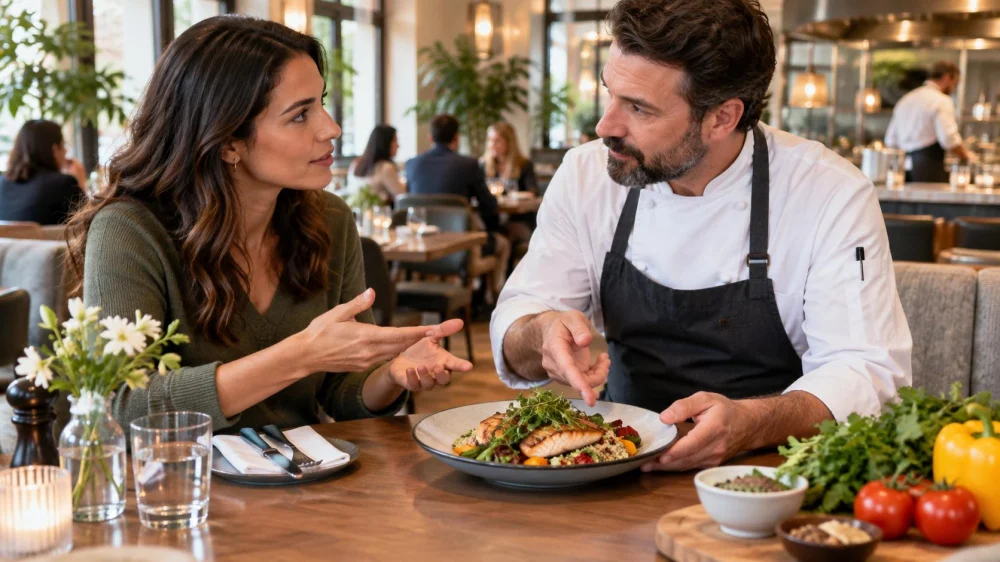
Restaurant Dietary Request: Verify Ingredients and Shared Prep
On this page
Quick answer
For Restaurant dietary request, start by defining the exact outcome and gathering reliable, current information. The practical goal is to state the exact restriction, ask about ingredients and shared preparation, and decide when uncertainty is unacceptable. Use a written checklist, verify anything safety-critical with the appropriate source or qualified professional, keep dated records, and stop when uncertainty could affect health, safety, money, access, or legal rights.

What this task should accomplish
Restaurant dietary request is a focused process for people who need to state the exact restriction, ask about ingredients and shared preparation, and decide when uncertainty is unacceptable. A useful plan separates confirmed facts from assumptions and identifies the next decision before action begins.
This guide is for diners in United States. Recipes, portions, ingredients, preparation methods, and allergen controls vary by restaurant and can change without notice.

Pre-check checklist
- State the dish, portion, texture, timing, and dietary need in clear terms.
- Ask which ingredients, garnishes, sauces, and sides are included today.
- Confirm whether substitutions or shared preparation change the choice.
- Keep hot foods hot and cold foods cold, and limit unnecessary holding time.
- Check the order and packaging before leaving or beginning a shared meal.
Step-by-step plan
- Decide which part of the meal matters most: flavour, texture, portion, timing, or dietary fit.
- Ask a specific question rather than relying on a menu label alone.
- Repeat critical allergy or dietary information and listen for uncertainty.
- Choose an alternative when the kitchen cannot confirm an essential requirement.
- Handle leftovers according to current food-safety guidance and discard food when safety is uncertain.
Keep the final checklist with dates, names, photos, receipts, instructions, and unanswered questions. Share only the information needed for the task and protect personal data.
Limits and important notes
A dining guide cannot verify a particular kitchen, ingredient list, cross-contact control, or food-safety condition on the day you visit.
For a diagnosed food allergy, follow the emergency plan and seek emergency help immediately for breathing difficulty, throat swelling, faintness, or a severe reaction.
Frequently asked questions
What should I prepare first?
Start with the exact decision or result connected to Restaurant dietary request, then gather the most reliable current records and instructions.
How much documentation is useful?
Keep enough dated evidence to show condition, scope, decisions, and completion. Avoid collecting unrelated personal information.
When should I stop and ask for help?
Stop when safety, technical scope, health, money, access, or legal responsibilities are unclear or the situation is worsening.
Sources and evidence
The evidence basis is general restaurant communication and food-safety guidance: ask specific questions, prevent cross-contact where required, control time and temperature, and use current local public-health advice.
Conclusion and next steps
Turn the checklist into one next action: state the exact restriction, ask about ingredients and shared preparation, and decide when uncertainty is unacceptable. Confirm responsibility and timing, keep the record, and revisit the plan if conditions change.





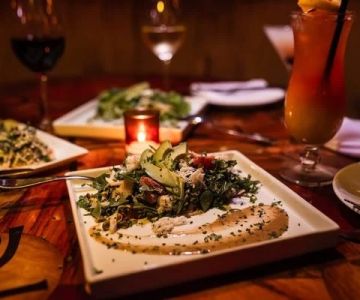
 Sanraku4.0 (631 reviews)
 Le Boulanger3.0 (322 reviews)
 SGD Tofu House San Jose4.0 (287 reviews)
 Teriyaki Madness4.0 (71 reviews)
 Chaat Cafe3.0 (684 reviews)
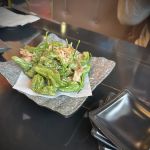 Goku Sushi4.0 (39 reviews)
 Restaurant Texture Guide: Ask Before Choosing a Dish
 Restaurant Dietary Request: Verify Ingredients and Shared Prep
 Restaurant Sharing Order: Balance Portions and Arrival Times
 Restaurant Work Notes: Condition, Timing, and Questions
 Restaurant Outdoor Seating: Shade, Wind, and Lightning
 Restaurant High Chair: Stability, Straps, and Placement