
Counter Service vs Table Service: What to Expect
On this page
Quick answer
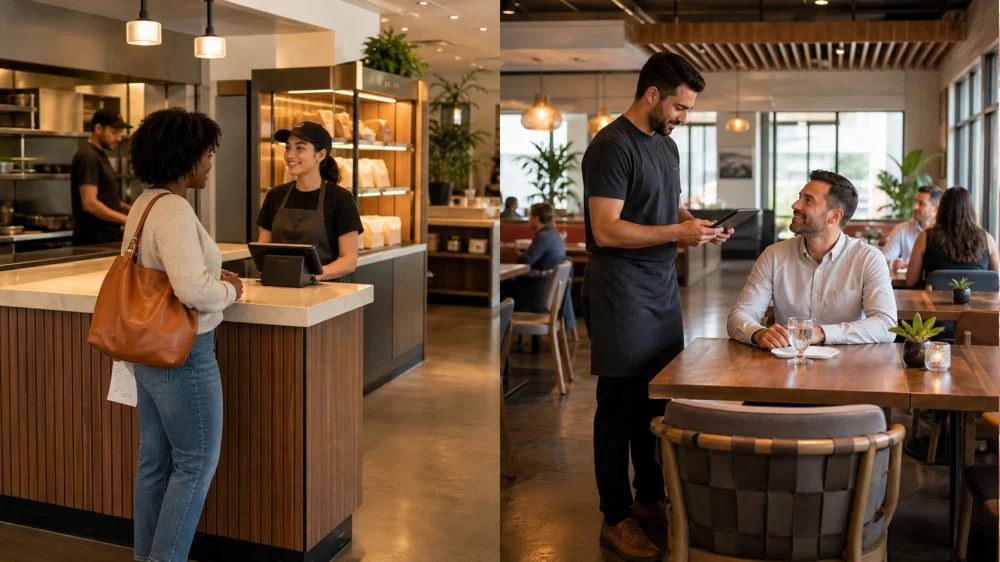
At counter-service restaurants, guests usually order and pay before sitting, then carry food or collect it when called. At table-service restaurants, guests are seated and order from a server, then typically pay after eating. Fast-casual and hybrid restaurants mix these steps. Confirm where to order, how food reaches the table, whether seating is reserved, and when payment occurs.
Define the service types
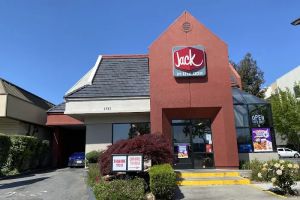
Counter service means the main transaction happens at an ordering counter, kiosk, or window. The diner may carry a tray, receive a pickup number, or wait for staff to bring the order. It does not automatically mean fast food, low prices, disposable plates, or no hospitality.
Table service means staff take orders and serve the meal at the table. The restaurant may use hosts, reservations, sections, and a check presented at the end. It does not guarantee formality, a long meal, or a particular price.
Fast casual often describes counter ordering with food prepared to order and a dining room intended for a longer visit than quick-service takeout. It is a business category, not a promise about speed. Hybrid service can mean ordering at a counter followed by table delivery, scanning a code at the table, or starting with a host and paying at a register.
Compare arrival and ordering
At counter service, first look for a line, ordering station, menu board, or sign directing guests. Do not claim a table before ordering unless the restaurant allows it; some dining rooms are reserved for guests with completed orders. When the menu is overhead, review it online beforehand if you need more time or a readable format.
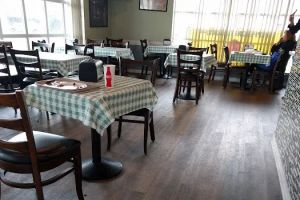
At table service, check in with the host even when empty tables are visible. The restaurant may manage server sections, reservations, or cleaned-table status. Ask whether the full party must arrive before seating and whether the kitchen or bar follows a different closing time.
For hybrid service, one direct question prevents confusion: “Do we order here first, or will someone come to the table?” Also ask whether separate diners can start separate tabs and whether online orders use a different pickup area.
Compare seating and food delivery
Counter-service seating may be first-come, first-served. Guests might carry food, drinks, condiments, and used dishes. Decide whether everyone in your group can manage those tasks or whether one person should order while another looks for an appropriate table.
Table service offers more staff contact and usually less carrying, making it useful for a paced meal, questions, or multiple courses. However, the guest still needs to describe timing, seating, communication, or dietary needs. Service style alone does not show whether a restaurant can provide a specific accommodation.
Some counter-service restaurants deliver food to numbered tables but expect diners to collect beverages and clear trays. Some table-service restaurants ask guests to pay at a front register. Watch the actual workflow rather than enforcing a label.
Plan payment and tipping
Counter service commonly requests payment when the order is placed. Table service commonly presents the bill near the end. Hybrid businesses may use QR codes, handheld terminals, open tabs, or pay-at-counter systems. Ask before ordering if your group needs split payments, cash acceptance, gift cards, or itemized receipts.
Tipping expectations vary with location, service provided, restaurant policy, and personal choice. A checkout screen is a prompt, not a complete explanation of how tips are distributed. Review the amount, service charge, gratuity line, and total before confirming. Ask staff whether a service charge is already included if the receipt is unclear.
Check access and assistance needs
Service format affects the physical route. Counter dining can involve queues, high menu boards, service counters, beverage stations, tray carrying, and self-busing. Table service can involve a host stand, narrow routes, fixed seating, and longer seated periods. Call ahead with concrete questions about the step that matters to you.
- Can staff take an order at an accessible counter or table?
- Is there a clear route through the queue and pickup area?
- Can staff carry a tray, read the menu, or bring condiments when needed?
- Are accessible dining surfaces available in the relevant area?
- Can the restaurant provide an alternative to a touchscreen or QR-only process?
Describe the assistance you need without assuming a particular layout. Current conditions can change with furniture, crowds, outdoor seating, or equipment, so confirm close to the visit.
Use a choice checklist
- Choose counter service when flexible arrival and a shorter transaction are priorities.
- Choose table service when pacing, staff interaction, or multiple courses matter more.
- Check whether seating is reserved, first-come, or assigned after ordering.
- Ask where to order, collect food, obtain drinks, and return dishes.
- Confirm payment timing and methods for your group.
- Ask specific questions about queues, counters, routes, tables, and assistance.
- Verify current hours and service format directly before a time-sensitive trip.
Frequently asked questions
Is counter service always faster?
No. It may reduce some steps, but cooking time, queue length, staffing, and order complexity determine the actual wait. Ask for a current estimate when timing matters.
Can I reserve a table at a counter-service restaurant?
Sometimes, especially for groups or events, but many use open seating. Check the restaurant’s current reservation policy instead of assuming from its service style.
Does table delivery make a restaurant table service?
Not necessarily. A restaurant can take orders and payment at a counter, then deliver food to a numbered table. The ordering and payment flow is often the clearer distinction.
What should I ask when the website is unclear?
Ask: “When we arrive, where do we order and pay, how do we get our food, and is seating assigned?” That short question usually reveals the full workflow.
Sources and limitations
The ADA National Network food-service factsheet discusses routes around ordering and pickup counters, seating, and self-service areas. The U.S. Access Board restaurant accessibility overview identifies queues, food-service lines, counters, and dining surfaces as relevant elements.
This article is general U.S. dining guidance, not legal advice or a statement about any specific restaurant. Service labels, layouts, policies, prices, tipping practices, and accommodations vary. Verify the current workflow directly.
Next steps
Pick the experience you want: flexible counter ordering, paced table service, or a hybrid. Before leaving, confirm four things—where to order, where to sit, how food arrives, and when to pay. Add any access, timing, or payment need as one specific follow-up question.


 Caseritos colombianos4.0 (17 reviews)
 Idly Express Drive-Thru4.0 (40 reviews)
 Pizza California4.0 (663 reviews)
 Burger King3.0 (83 reviews)
 Las 7 Regiones3.0 (372 reviews)
 Shima Sushi4.0 (202 reviews)
 Why More Restaurants Are Staying Open All Day—and What That Means for You
 Best Restaurants for Late‑Night Fine Dining That Are Open Until Midnight
 Ultimate Guide to Southern Style Fried Chicken: Secrets of Perfectly Crispy Chicken
 Most Popular Vegan Tacos in LA
 Discover Restaurants That Are Perfect for Both Lunch and Dinner | Dining Guide
 The Best Late-Night Food Spots Serving Burgers and Fries After 10 PM